
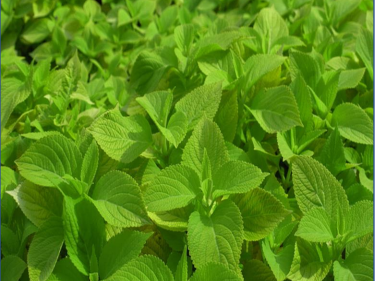
Patther Chur / Pashan Bhedi (Coleus / Hriver)
Coleus barbatus Benth.
Family: Lamiaceae
An erect, profusely branched aromatic annual herb growing up to 1.5 m in height. Flowers are borne in racemes and roots are well developed.
Common Names:
Coleus, Makkari Beru, Pashanbad, Patther Chur, Pashan Bhedi, Mainmul, Karpuravali
Hindi: Patharchur, Pashan Bhedi
Sanskrit: Balakah, Gandira, Pashanabhedi
Kannada: Makkari Beru
Distribution:
Rajasthan, Maharashtra, Karnataka, Tamil Nadu and Madhya Pradesh.
Part Used:
Roots.
Cultivation:
Soil and Climate:
Grows well in red sandy loam soil. Soft soil with pH 5.5–7 and low moisture content is considered ideal for good plant growth. Thrives in hot, humid tropical and sub-tropical climates under irrigation.
Nursery Raising and Planting:
Propagated by seeds and stem cuttings, though stem cuttings are preferred. Stem cuttings of 10–12 cm length are planted in well-manured nursery beds during May–June. Cuttings sprout and root within one month. Rooted plants are transplanted to the main field during July–August at 20 × 20 cm spacing. Approximately 33,600 stem cuttings are required per acre.
Weeding and Hoeing:
Regular weeding and hoeing are required to maintain proper growth.
Manures and Fertilisers:
Compost or Farm Yard Manure (FYM) at 4 tonnes per acre is recommended.
Irrigation:
Watering every third day during initial establishment. After establishment, irrigation is provided weekly or fortnightly depending on soil moisture and climate.
Harvesting / Post-Harvest:
Crop matures in about 150 days. Harvesting is usually done in November–December. Plants are carefully dug, roots lifted, cleaned and cut into small pieces for drying and storage. Dried roots are stored in polythene-lined gunny bags.
Yield:
Approximately 600–1000 kg of dry roots per acre.
Economics (Year – 2001):
Net income: Rs. 50,000/- to 75,000/- per hectare.
Note: Market for medicinal plants is volatile and economics may vary.
Medicinal Uses:
Used in Ayurvedic medicine for treatment of heart diseases, spasmodic pain, painful urination and convulsions. Traditionally recommended for high blood pressure, chest pain (angina) and respiratory disorders such as asthma. The roots contain forskolin, an important bioactive compound used in therapeutic preparations.

Reviews
There are no reviews yet.