
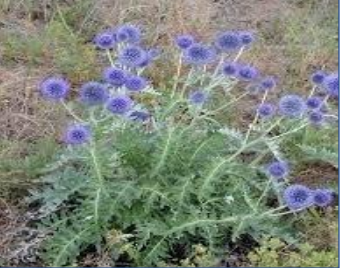
Kuth
Saussurea lappa C.B. Clarke
Family: Asteraceae
Kuth is a robust, erect perennial plant with large leaves. Roots are stout and may grow up to 60 cm long. The root is the medicinally important part. Flowering and fruiting occur during August–September, and seeds are collected during September–October.
Common Names:
Kur, Kusthah, Costus
English: Costus, Kuth, Costus Root
Ayurveda: Kustha
Hindi: Kutha, Kut, Kur, Pachak, Kudo, Kot, Pokharmul
Sanskrit: Amaya, Pikala, Apya, Kashmirja, Utpalam, Kushta, Kashtam, Puskara, Kaubera
Kannada: Koshta, Changal
Tamil: Kostum, Putchuk, Goshtam, Kosbtham, Kottam
Telugu: Changala, Kustam, Koshtu
Location:
Himachal Pradesh, Uttarakhand, Uttar Pradesh, Jammu & Kashmir, Sikkim and Arunachal Pradesh.
Part Used:
Tuberous root.
Cultivation:
Soil and Climate:
Sandy loam soil rich in moisture and organic carbon is ideal for good germination and seedling survival. The plant grows in temperate and sub-alpine regions at altitudes of 1200–1800 m.
Planting:
Seeds are sown in nursery beds during April–May. When seedlings reach about 15 cm height, they are transplanted to the main field.
Irrigation:
The crop requires 5–6 irrigations between May and September. Irrigation is particularly important during seed sprouting stage.
Manures, Fertilisers and Pesticides:
The crop should preferably be grown without chemical fertilizers and pesticides. Organic manures such as Farm Yard Manure (FYM), Vermi-compost and Green manure may be applied as required. Bio-pesticides prepared from Neem (kernel, seeds and leaves), Chitrakmool, Dhatura and Cow’s urine may be used for disease management.
Harvesting / Post-Harvesting:
Well-developed mature root tubers are obtained in 2–3 years, but economic yield is generally harvested from 3-year-old crop. Roots are harvested in early September–October or in early spring. Roots are washed thoroughly and dried for processing.
Yield:
After 2–3 years, about 200–300 kg of dry tuberous roots per hectare can be obtained. Market rate is approximately Rs. 40–45 per kg.
Economics (Year – 2001):
Expenditure per hectare: Rs. 14,000/-
Return per hectare: Rs. 45,000/-
Net income per hectare: Rs. 31,000/-
Note: Market for medicinal plants is volatile and economics may vary.
Medicinal Uses:
The root has been used traditionally in treatment of asthma, bronchitis, ulcers and various stomach disorders. It is known for anti-inflammatory and therapeutic properties and is valued in traditional systems of medicine.


Reviews
There are no reviews yet.